 EN
 ES
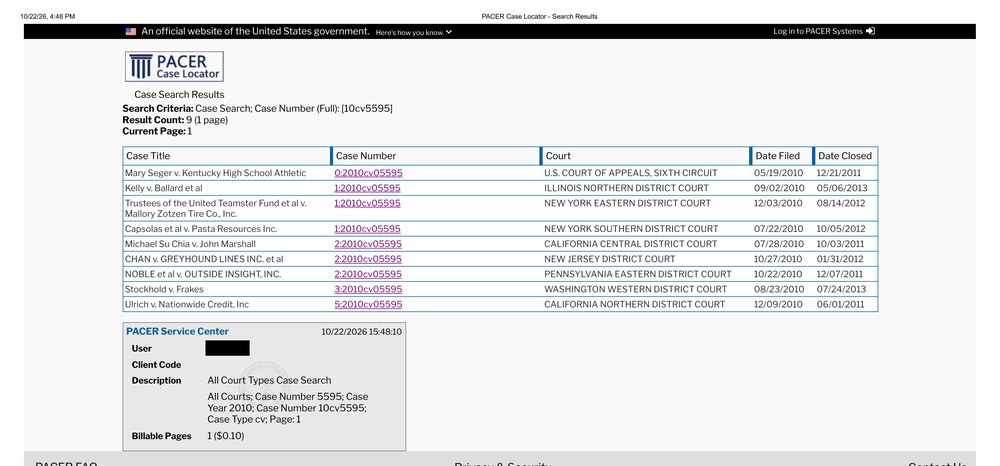
Who Enforces the FLSA? Mario Batali and Case No. 1:10-cv-05595
News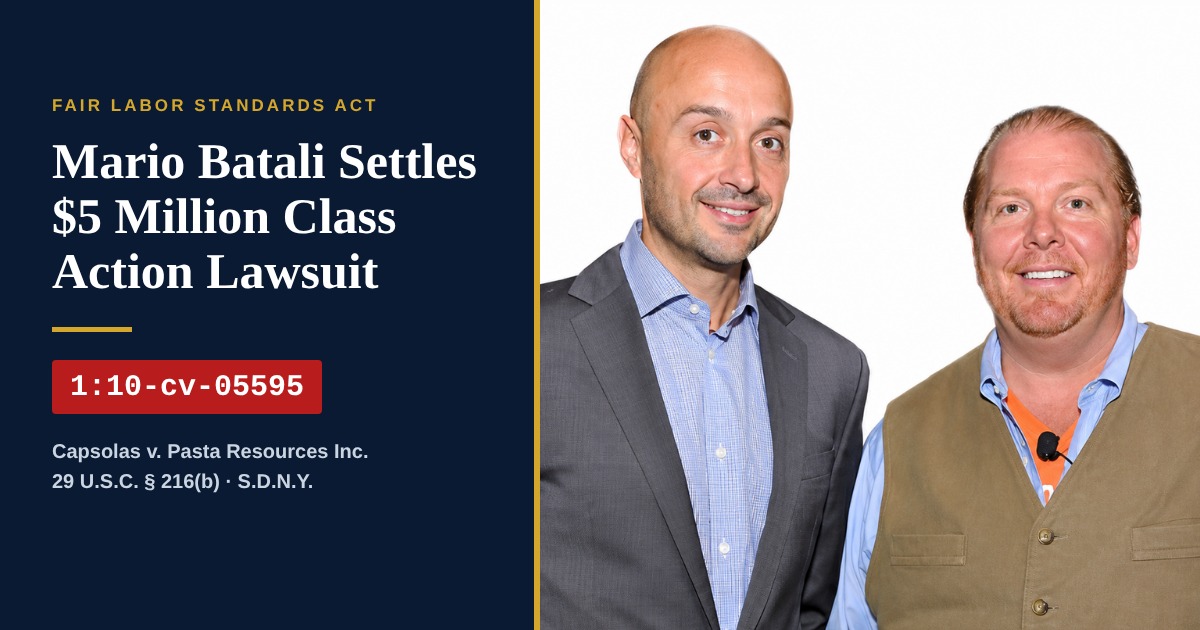
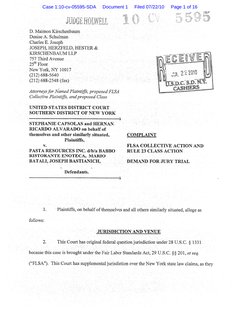
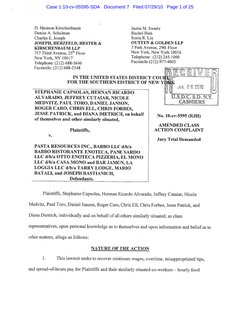
Mario Batali paid $5.25 million to settle an FLSA class action, Capsolas v. Pasta Resources Inc., 1:10-cv-05595 (S.D.N.Y.). In our view, the case should have begun with a Department of Labor audit, not with private attorneys. We also argue the court’s order to hand over workers’ personal information violated the defendants’ Fourteenth Amendment rights. The post covers the case, the Fair Labor Standards Act, and eight other 2010 cases that share the same number.
The code of this case is 29 U.S.C. § 216(b). In our view, this code is not a violation code: it is a citation and enforcement tool of the Department of Labor, working with the Department of Justice, to make an employer pay employees’ benefits and the Department of Labor’s legal fees. We believe the federal court has no jurisdiction over this code, and only the Department of Labor has the authority to enforce it.
The Case at a Glance
Capsolas v. Pasta Resources Inc. · U.S. District Court, S.D.N.Y.
|
COURT
U.S. District Court, Southern District of New York
PARTIES
Stephanie Capsolas, Hernan Ricardo Alvarado and other workers v. Pasta Resources Inc. (Babbo), Mario Batali, Joseph Bastianich
CLAIM
Unpaid wages and tips under the FLSA, 29 U.S.C. § 216(b)
OUTCOME
Settled for $5.25 million (March 2012)
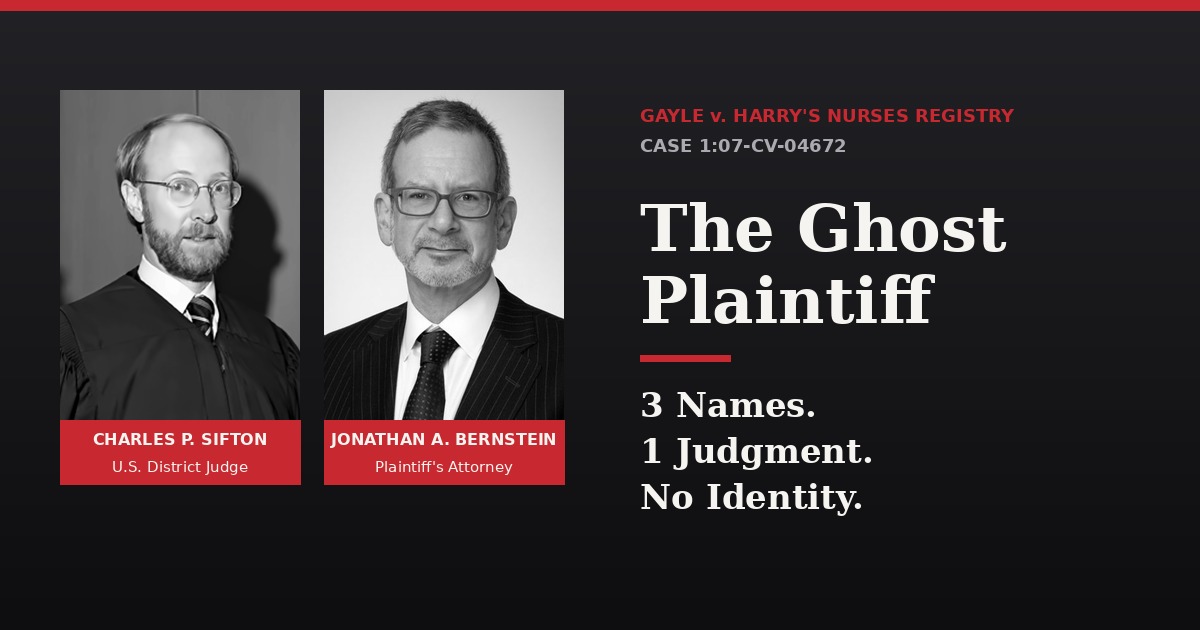
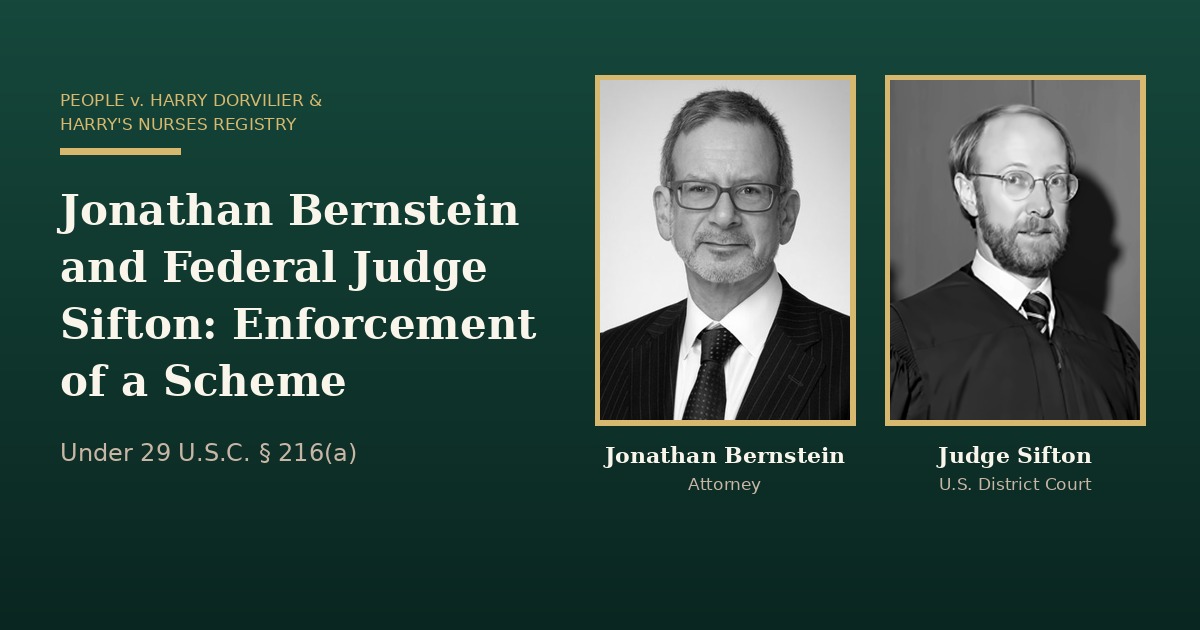
JUDGES
|
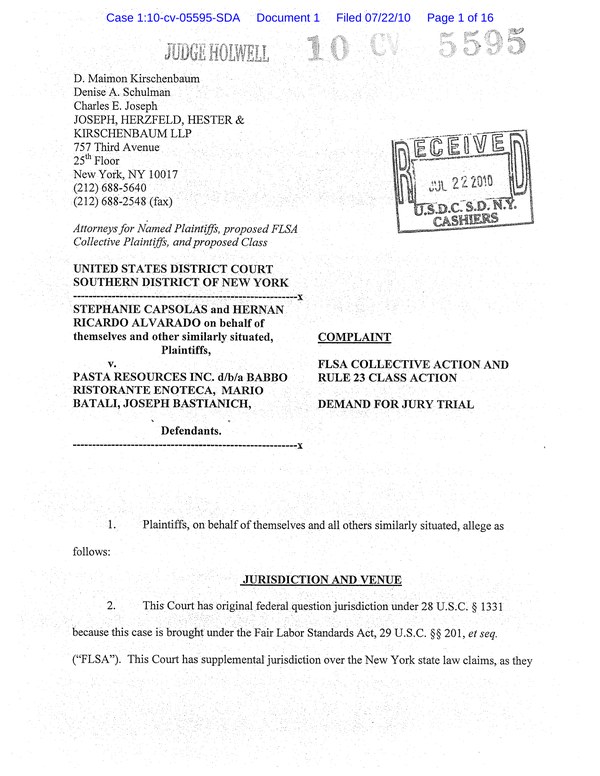
Complaint · Document 1
|


What the court said: on May 9, 2011, Judge Holwell allowed notice to go to tipped workers at all eight Batali restaurants; the case later settled without a finding of liability.
Our View
Our argument, point by point
1
The Labor Department should act first
According to the Fair Labor Standards Act of 1938, an employer must violate 29 U.S.C. §§ 206, 207 and 255. After an audit, the Department of Labor will have to identify the violation and circulate notice to all the potential employees from the audit, and get the consent of those who are willing to participate in the class action lawsuit against the employer. Then the Department of Labor will have to get the consent in order to proceed to file the summons and complaint to enforce 29 U.S.C. § 216(a), (b), (c), (d). Only then does the court have jurisdiction to enforce the law. However, in our view, Mario Batali was forced to settle his lawsuit by the attorneys and the court because of his fame. Thousands of employers are harassed every year across the country because of this type of scheme.
2
The consent was not valid
In our view, the consent that the plaintiffs’ attorneys provided is not valid, because it was written and signed without the involvement of the Department of Labor. According to the labor law as we understand it, the Department of Labor shall conduct an audit to find a violation of 29 U.S.C. §§ 206, 207 and 255. Prior to determining a violation of those codes, a lawsuit shall not be filed in federal court. However, here in Mario Batali’s case, that law was never applied. Therefore, we believe this lawsuit is a scheme.
3
The court’s order (the “Summary Judgment”)
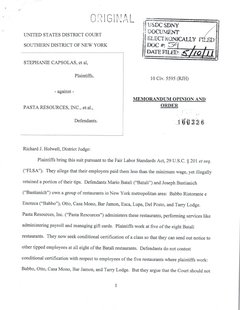
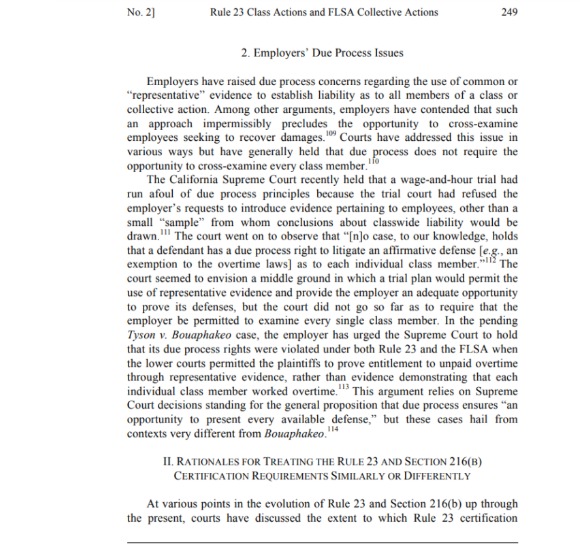
According to the court’s order, the court granted the plaintiffs’ demand to disclose the names, addresses, telephone numbers and Social Security numbers of potential opt-in plaintiffs, which, in our view, allowed the plaintiffs’ attorneys to conduct a scam. We believe the law does not allow the court to order the defendants to disclose names and other contact details to the plaintiffs. By giving such an order, the court, in our view, violated the Fourteenth Amendment rights of the defendants: Mr. Mario Batali, Mr. Joseph Bastianich and their corporation, Pasta Resources, Inc. There were no violations of 29 U.S.C. § 216(a), (b), (c), (d), and the judge misinterpreted the law.
The order, filed May 10, 2011, called for Social Security numbers only if a mailed notice came back undeliverable.
“Rule 23 Class Actions and FLSA Collective Actions,” p. 249 · Employers’ Due Process Issues
4
The casualties
The casualties of the wrong order are high for Mr. Mario Batali, who later left the restaurant business to his former partner, Mr. Joe Bastianich. (The March 2019 buyout followed separate misconduct allegations.)
The Law: Fair Labor Standards Act
Including the definition of “companionship services”
WHAT THE FLSA REQUIRES
The Fair Labor Standards Act (FLSA) provides a national minimum hourly wage (29 U.S.C. § 206), mandatory overtime compensation (29 U.S.C. § 207), and restrictions on the employment of minors (29 U.S.C. § 212). The FLSA also requires employers to maintain accurate employee records in accordance with the Act’s provisions (29 U.S.C. § 211). To ensure employer compliance with these requirements, both civil and criminal sanctions were provided. Section 215 of Title 29, United States Code, lists the prohibited acts under the FLSA. Section 216(a) of Title 29 provides a criminal misdemeanor penalty for willful violations of 29 U.S.C. § 215. Imprisonment up to six (6) months for each offense may be imposed only upon a second or subsequent conviction for an offense under the Act.
CIVIL LIABILITY AND PENALTIES
Section 216(b) of Title 29 provides for an employer’s civil liability for violations of 29 U.S.C. § 215. Broad injunctive relief to curtail any practice which would constitute a violation of section 215 or to obtain remedial action is available under Section 217 of Title 29 (29 U.S.C. § 217). Where an employer consistently violates a decree or consent judgment, or where the FLSA violations are sufficiently aggravated, criminal sanctions can be pursued under 18 U.S.C. § 401 or 29 U.S.C. § 216. Following conviction under 29 U.S.C. § 216(a) for a monetary violation, it is suggested that restitution be pursued as a part of the criminal sentence.
WHAT “COMPANIONSHIP SERVICES” MEANS
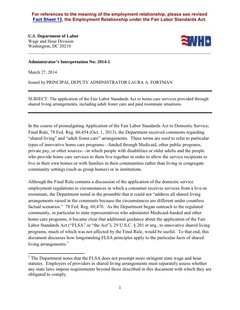
The Final Rule narrowed the definition of “companionship services” to ensure that FLSA protections apply to most workers who provide home care services. 78 Fed. Reg. 60,459, 60,463-73. As of the effective date of the Final Rule, January 1, 2015, “companionship services” means the provision of “fellowship” and “protection.” 78 Fed. Reg. 60,557 (to be codified at 29 C.F.R. § 552.6). “Fellowship” means “to engage the person in social, physical, and mental activities, such as conversation, reading, games, crafts, or accompanying the person on walks, on errands, to appointments, or to social events.” Id. “Protection” means “to be present with the person in his or her home or to accompany the person when outside of the home to monitor the person’s safety and well-being.” Id.
WHAT COUNTS AS CARE
Companionship services can also include the provision of “care” if the care is provided “attendant to and in conjunction with the provision of fellowship and protection and if it does not exceed 20 percent of the total hours worked per person and per workweek.” Id. In this context, “care” means assistance with activities of daily living (ADLs), “such as dressing, grooming, feeding, bathing, toileting, and transferring” and instrumental activities of daily living (IADLs), “such as meal preparation, driving, light housework, managing finances, assistance with the physical taking of medications, and arranging medical care.” Id. Companionship services do not include “domestic services performed primarily for the benefit of other members of the household,” nor “the performance of medically related services” for the consumer. Id. “Medically related services” are services that “typically require and are performed by trained personnel, such as registered nurses, licensed practical nurses, or certified nursing assistants” regardless of the actual training or occupational title of the provider.
HOW IT APPLIES
Therefore, whether a provider employed solely by a consumer in a shared living arrangement that occurs in the consumer’s private home is entitled to FLSA protections will depend on the tasks she performs for the consumer. For example, a provider who helps a consumer bathe and dress each morning, prepares the consumer’s meals, and assists the consumer with preparing for bed in the evening and does not provide other services is not providing companionship services and therefore is performing domestic service employment that is subject to FLSA protections. Similarly, a provider who provides daily assistance with tube feeding is providing medically related services, and therefore, regardless of her other duties, her work does not fall within the companionship services exemption. On the other hand, a provider whose only responsibility is to spend nights at the residence in case of emergencies is providing companionship services in a given workweek if: (1) the provider does not spend more than 20 percent of her work hours assisting the consumer with ADLs and IADLs and does not perform medically related services and (2) the provider is not an employee of a third-party entity, such as a public or private agency administering the program through which the shared living arrangement was developed. If those two conditions are met, the provider need not be paid in compliance with the FLSA.
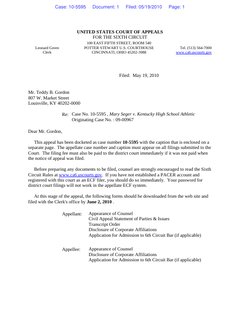
One Number, Nine Cases
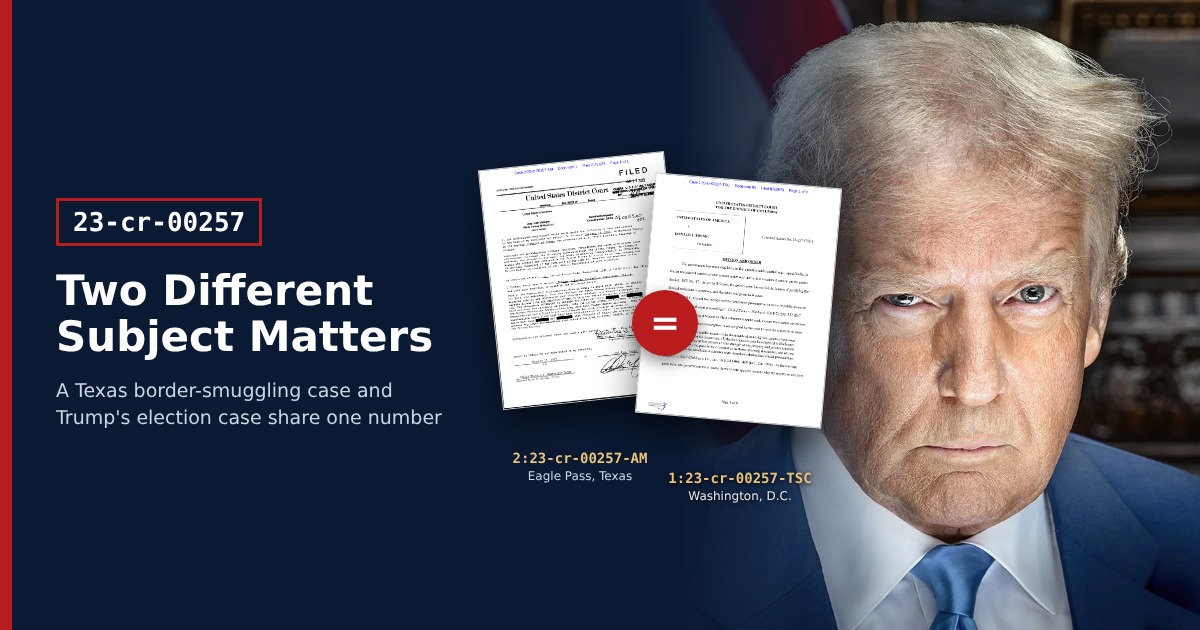
PACER search for 10cv5595
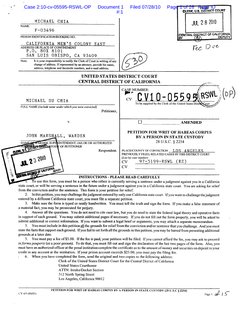
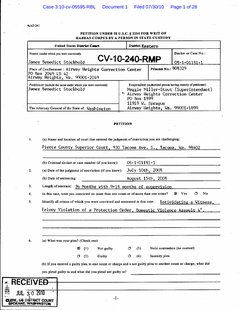
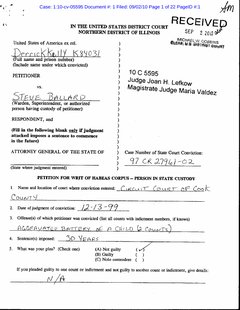
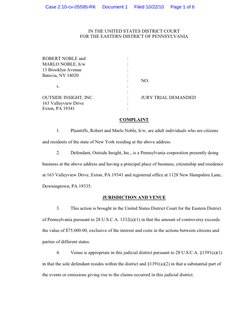
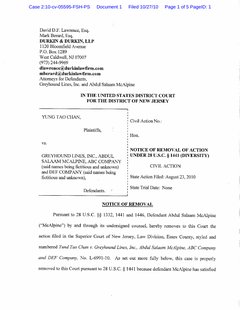
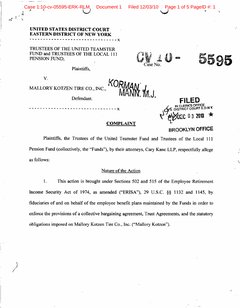
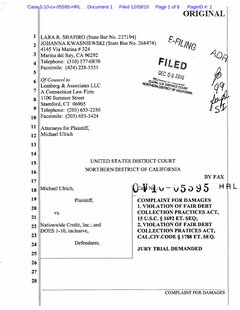
In our view, the Batali case shows what happens when FLSA enforcement starts with private attorneys instead of the Department of Labor.
Sources: court filings above; PACER Case Locator; Federal Judicial Center biographies; Eater NY; CBS News; Fortune.
Related Posts